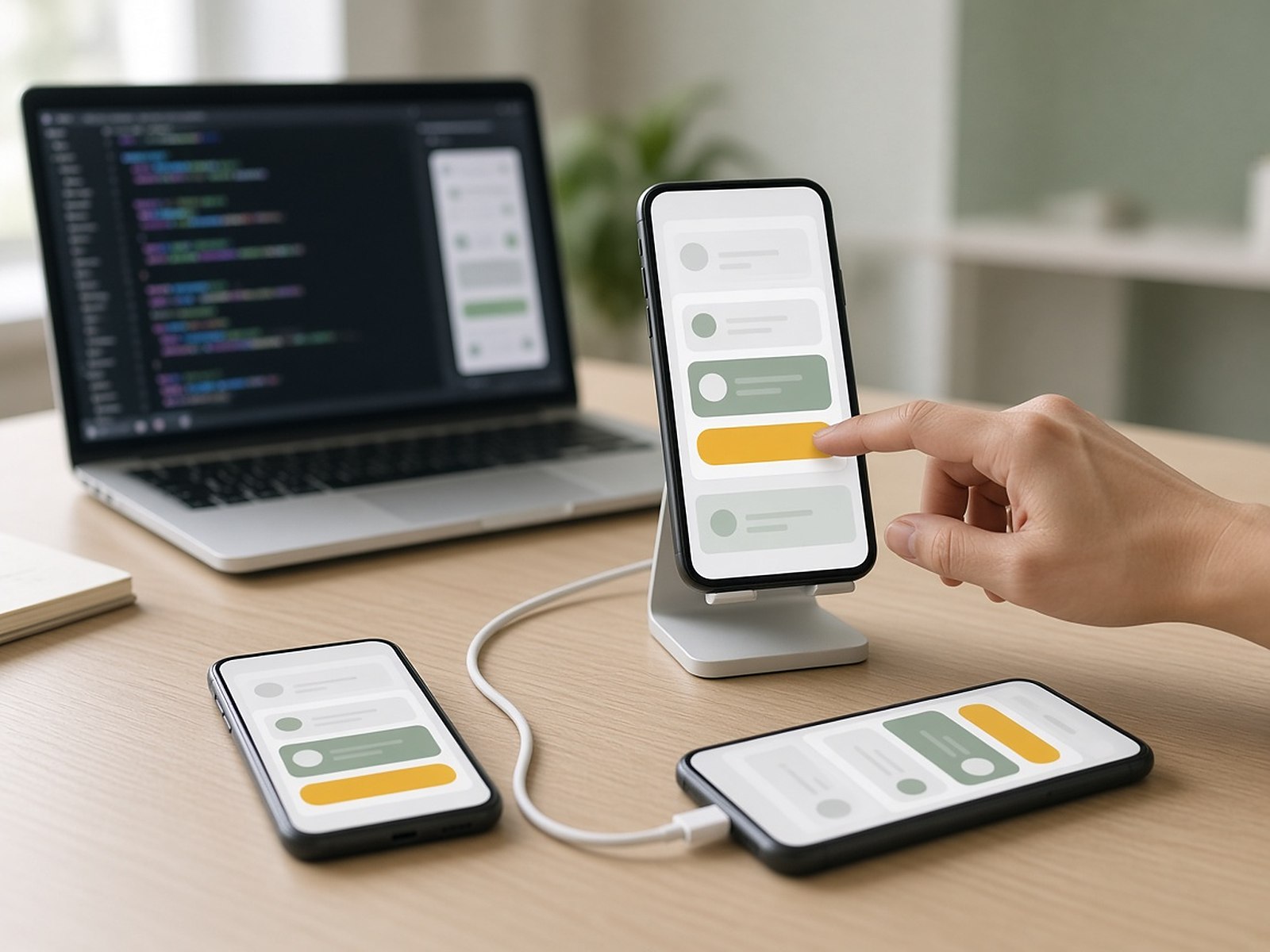
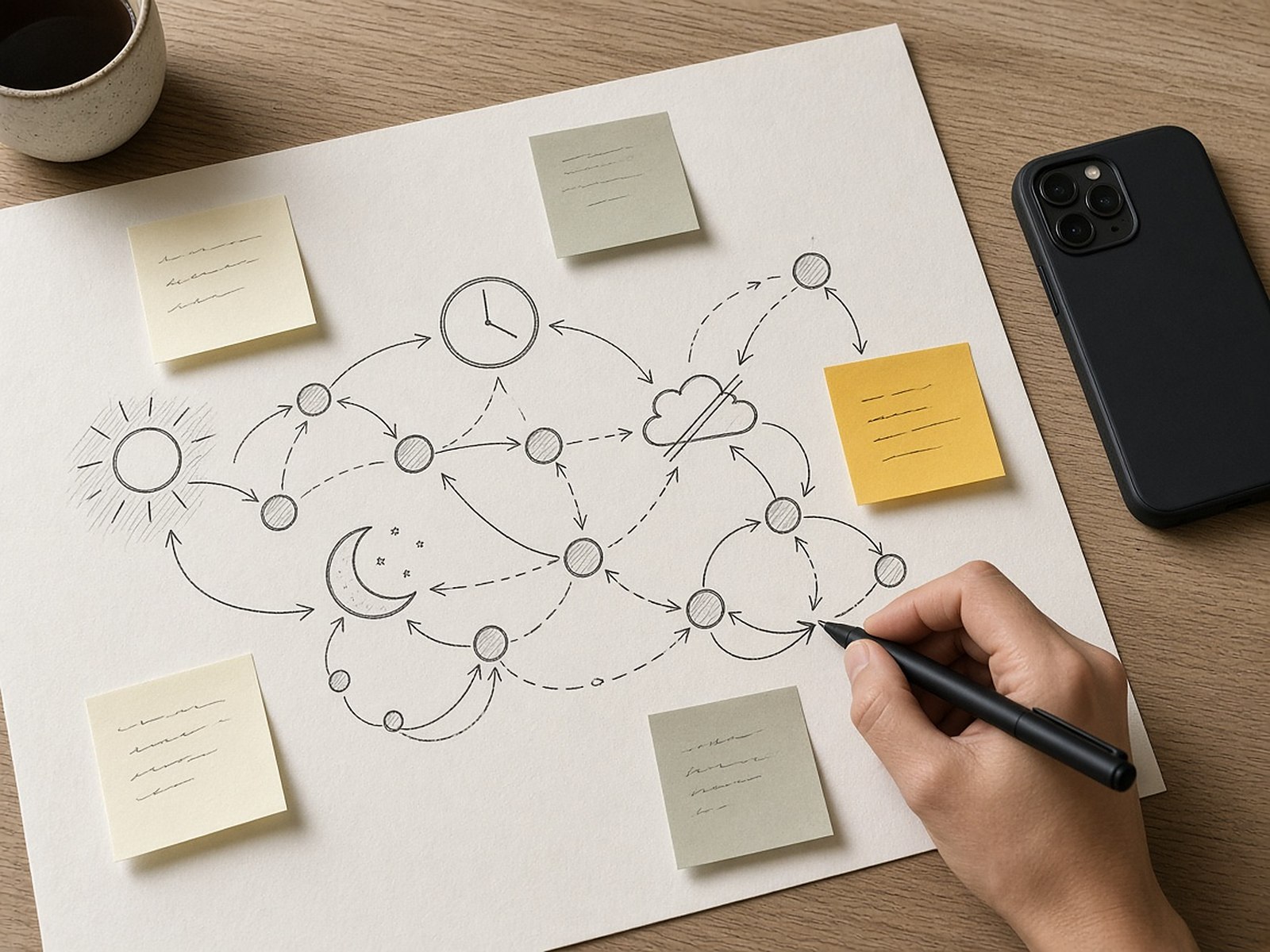
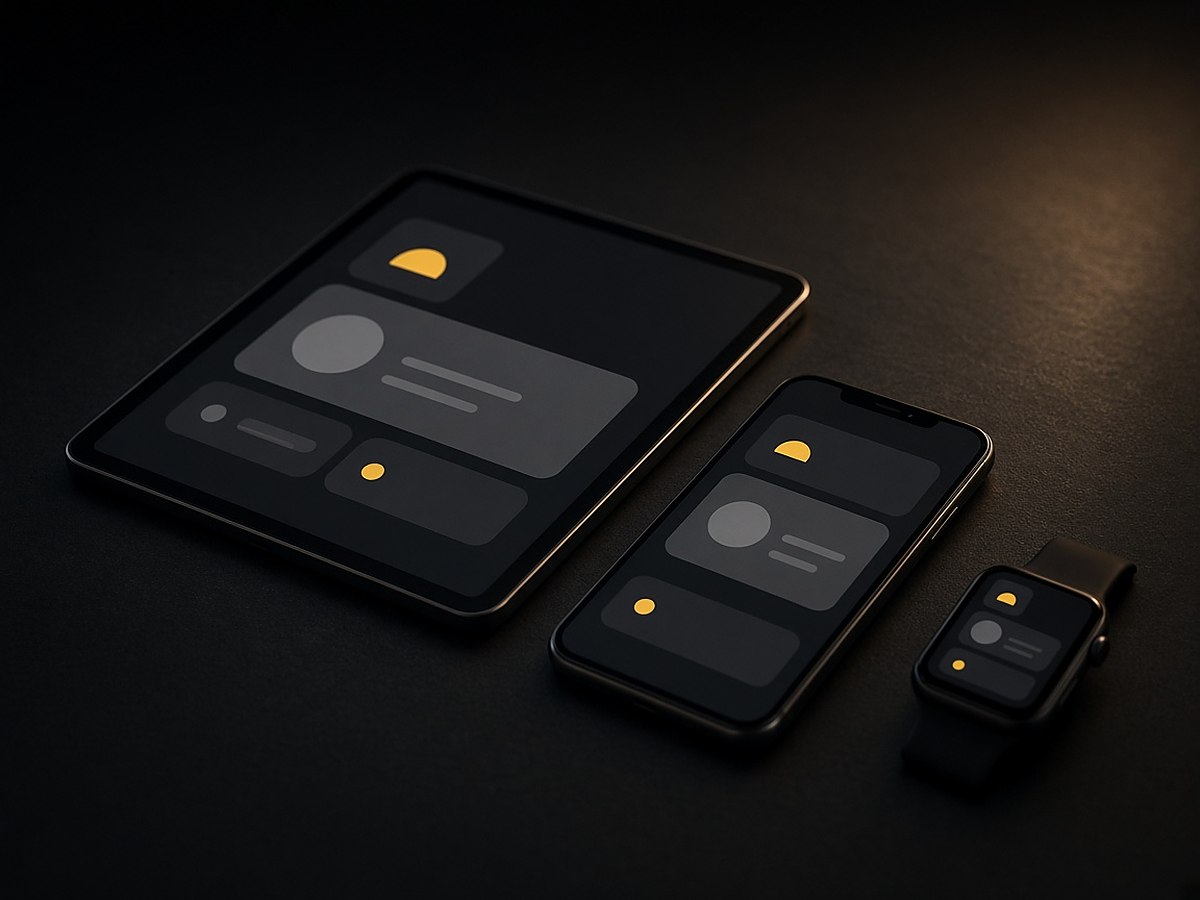
A mobile product can become part of how people use, discover and return to a brand. We create mobile experiences that make those interactions useful, intuitive and worth repeating.
SOME EXPERIENCES ARE BETTER WHEN THEY STAY WITH YOU.
A website asks someone to visit.
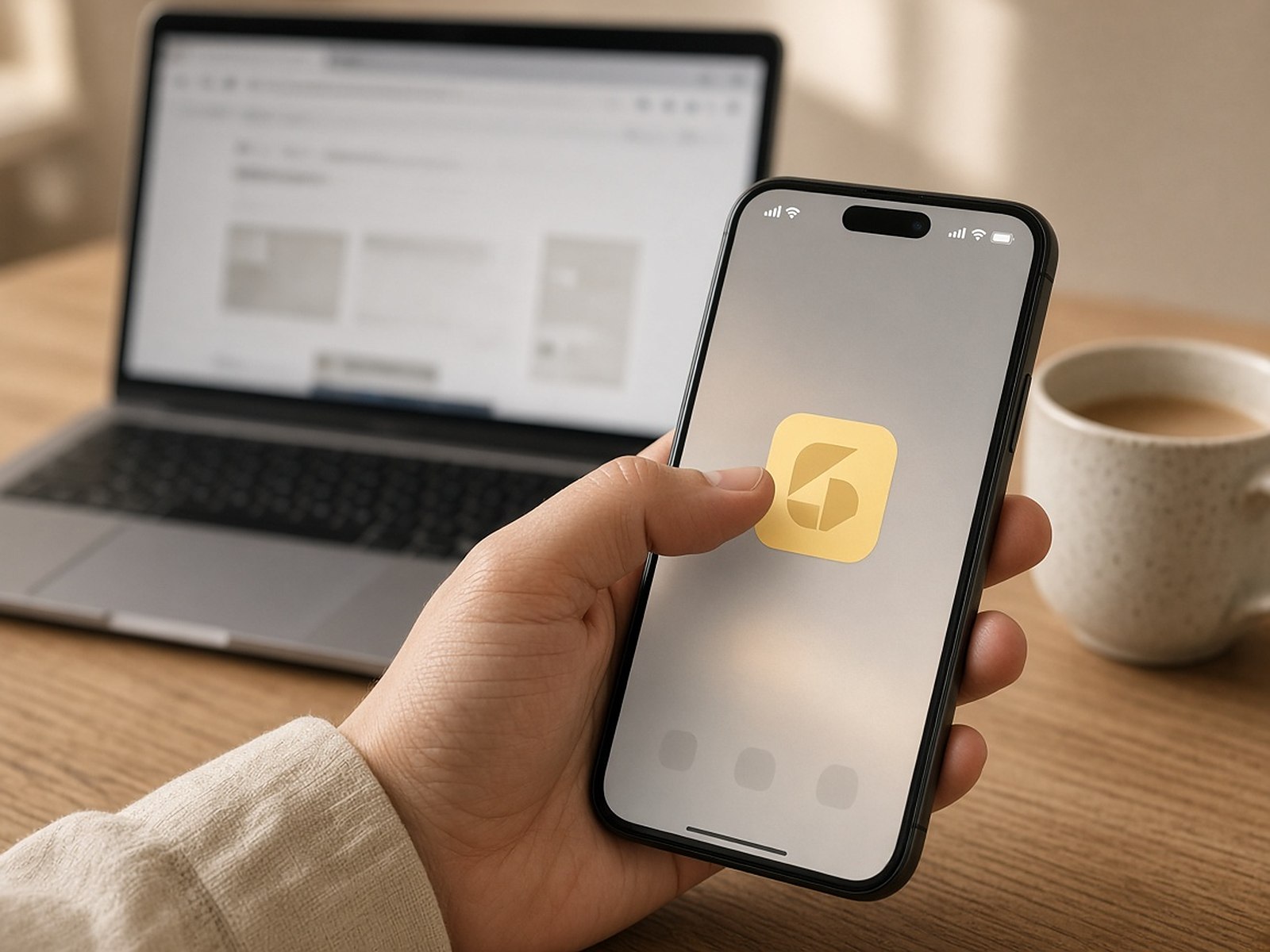
A mobile product can become something they carry with them.
It can remember preferences, reduce repeated effort, make familiar actions faster and create a relationship that grows through use.
The difference is not simply that an app lives on a phone.
It is that the experience can become part of the user’s routine.
A VISIT CAN CREATE INTEREST.
REPEATED USE CAN CREATE HABIT.
03
/ THE DIFFERENCE
AN APP IS NOT A SMALLER WEBSITE.
Mobile changes how people interact.
The screen is smaller.
Sessions can be shorter.
Gestures become part of the experience.
Notifications can bring the product back into attention.
Speed matters more.
Familiarity matters more.
THE QUESTION ISN'T:
How do we fit the website into a phone?
IT IS:
What should this experience become when the phone is the starting point?
A website can be designed around exploration. A mobile product often needs to be designed around action.
04
/ OUR CAPABILITIES
TWO DISCIPLINES. ONE PRODUCT EXPERIENCE.
01
MOBILE APP DEVELOPMENT
From product architecture and development to integrations, performance, testing and launch, we build mobile products that are designed to work in the real world.
The technology has to be stable.
The product has to be scalable.
The experience has to remain useful as the business grows.
02
PRODUCT EXPERIENCES
We shape the journeys, interactions, information and moments that determine whether the product feels clear, intuitive and worth returning to.
A technically strong product can still become a difficult product if the experience was never properly considered.
TWO DISCIPLINES.
ONE RESPONSIBILITY.
The product has to work technically and make sense humanly.
05
/ THE HUMAN SIDE
PEOPLE DON'T OPEN APPS. THEY OPEN THEM FOR A REASON.
To check something.
To buy something.
To book something.
To communicate.
To create.
To track.
To solve something.
Every tap begins with an intention.
The product should understand that intention and make the next step easier.
THE BEST INTERACTIONS DON'T ASK FOR ATTENTION.
THEY RESPECT IT.
A user should not have to think about where to tap, what a screen means or what happens next. Good product design removes uncertainty before it becomes friction. And when the experience feels natural, the interface starts to disappear.
06
/ WHY INVEST
THE REAL VALUE OF AN APP IS NOT THE DOWNLOAD.
A download is an event.
Usage is behaviour.
Returning is a relationship.
A mobile product creates value when people find it useful enough to come back, simple enough to keep using and relevant enough to become part of their routine.
01
FREQUENCY
More opportunities to interact.
02
CONVENIENCE
Less friction in repeated actions.
03
PERSONALISATION
An experience that can become more relevant over time.
04
RETENTION
More reasons to stay connected.
05
UNDERSTANDING
Better visibility into how people use the product.
The goal is not to collect downloads.
IT IS TO CREATE SOMETHING WORTH OPENING AGAIN.
07
/ THE LONG GAME
THE BEST PRODUCTS BECOME EASIER TO USE OVER TIME.
People learn the product.
The product learns from people.
Repeated actions become familiar.
Preferences become clearer.
Friction becomes easier to identify and remove.
The experience becomes more personal.
VERSION ONE IS NOT THE FINISH.
It is the foundation for everything you learn next.
The strongest products are not built by trying to predict every future need. They are built with enough clarity and flexibility to respond when those needs become visible.
08
/ BEFORE YOU BUILD
DON'T START WITH SCREENS. START WITH BEHAVIOUR.
Before designing the first interface, understand what the product is actually asking people to do.
01
WHO IS IT FOR?
02
WHAT PROBLEM BRINGS THEM BACK?
03
HOW OFTEN WILL THEY USE IT?
04
WHAT SHOULD FEEL EFFORTLESS?
05
WHAT NEEDS TO HAPPEN IN A FEW SECONDS?
06
WHAT SHOULD THE PRODUCT REMEMBER?
07
WHAT SHOULD HAPPEN OFFLINE?
08
WHY WOULD SOMEONE RETURN TOMORROW?
These questions influence the product long before visual design begins.
The interface comes later.
BEHAVIOUR COMES FIRST.
09
/ THE SYSTEM
A MOBILE PRODUCT IS A BRAND IN MOTION.
A mobile experience is more than an interface.
It brings together:
BRAND
How the product looks, sounds and feels.
UX
How people move through it.
PRODUCT LOGIC
What the experience allows them to do.
CONTENT
What helps them understand and act.
NOTIFICATIONS
How the product returns to their attention.
COMMERCE
Where interaction can become transaction.
DATA
What the product learns from behaviour.
SUPPORT
What happens when something goes wrong.
Every layer contributes to the experience.
When these pieces work together, the product stops feeling like an app attached to the brand.
IT STARTS FEELING LIKE THE BRAND ITSELF.
10
/ OUR PROCESS
GREAT PRODUCTS ARE BUILT THROUGH MANY SMALL DECISIONS.
A strong mobile product is not created in one jump from idea to app store. It moves through several layers of thinking, design, development and learning.
01
PRODUCT STRATEGY
DEFINE THE ROLE THE PRODUCT NEEDS TO PLAY.
Understand the business, the audience, the opportunity and what the product needs to achieve.
02
PRODUCT DEFINITION
DECIDE WHAT BELONGS IN THE FIRST VERSION.
Separate what is essential from what can wait. The first version should solve the right problem, not every possible problem.
03
UX ARCHITECTURE
STRUCTURE THE EXPERIENCE AROUND REAL BEHAVIOUR.
Define journeys, navigation, interactions and the logic behind the experience.
04
UI DESIGN
TURN THE BRAND INTO AN INTERFACE.
Create a visual system that feels clear, distinctive and natural to use.
05
DEVELOPMENT
TURN THE EXPERIENCE INTO A REAL PRODUCT.
Build the application, integrations and underlying systems required for reliable everyday use.
06
TESTING
FIND THE FRICTION BEFORE USERS HAVE TO.
Test the experience across devices, journeys and real situations.
07
LAUNCH
PUT THE PRODUCT INTO THE HANDS OF REAL PEOPLE.
Launch with the foundation needed to observe, learn and respond.
08
ITERATION
USE WHAT THE PRODUCT LEARNS.
Improve the experience through real behaviour, feedback and changing business needs.
THE LAUNCH IS NOT THE FINISH LINE.
IT IS THE BEGINNING OF THE PRODUCT'S REAL EDUCATION.
11
/ BUILT FOR WHAT COMES NEXT
YOUR FIRST VERSION IS NOT YOUR FINAL PRODUCT.
You will learn things after launch that you could never have known before.
People will use features differently than expected.
Some behaviours will become important.
Others will disappear.
New opportunities will emerge.
That is normal.
The mistake is not changing the product. The mistake is creating a foundation where every change becomes painful.
BUILD THE CORE WELL.
LET THE PRODUCT EVOLVE AROUND IT.
A good product should have enough structure to remain stable and enough flexibility to keep learning.
12
/ THE RIGHT TIME
BUILD AN APP WHEN THE EXPERIENCE DESERVES ITS OWN SPACE.
Not every business needs a mobile app.
Sometimes a website is enough.
A dedicated mobile product becomes more meaningful when people have a reason to return frequently, when convenience matters, when personalisation matters or when the experience itself becomes part of repeated behaviour.
01
PEOPLE RETURN OFTEN.
A repeated interaction may justify a dedicated experience.
02
THE SAME ACTION HAPPENS REPEATEDLY.
Frequent tasks become easier when they are built around the user’s routine.
03
CONVENIENCE HAS REAL VALUE.
Reducing friction can change whether people complete the action at all.
04
PERSONALISATION WOULD CHANGE THE EXPERIENCE.
A product can respond to individual behaviour in ways a generic experience cannot.
05
THE EXPERIENCE NEEDS TO BE CLOSER TO THE USER.
The value may come from making the product available at exactly the moment it is needed.
06
THE BROWSER IS BECOMING THE LIMITATION.
Sometimes the existing digital experience has simply reached the point where a dedicated product makes more sense.
The question is not whether a business can build an app.
IT IS WHETHER THE EXPERIENCE DESERVES ONE.
13
/ OUR PHILOSOPHY
A GOOD PRODUCT DISAPPEARS INTO THE USER'S ROUTINE.
INTENT
KNOW WHAT THE USER CAME TO DO.
Every meaningful product begins with a clear reason for existence.
SIMPLICITY
REMOVE EVERYTHING THAT GETS IN THE WAY.
The interface should make the important action easier, not compete with it.
CONTINUITY
A GOOD EXPERIENCE SHOULD FEEL FAMILIAR WITHOUT EVER FEELING STAGNANT.
The product should not constantly ask to be noticed.
IT SHOULD BECOME USEFUL ENOUGH TO BE REMEMBERED.
14
/ MOBILE EXPERIENCES
LET'S PUT THE EXPERIENCE IN THEIR HANDS.
Whether you are starting with an idea, turning an existing service into a product or building the next layer of an established brand, the experience deserves to be considered as carefully as the technology behind it.